
What Is PPF? A Complete Guide to Paint Protection Film

Modern PPF is typically made with advanced polyurethane materials such as TPU (Thermoplastic Polyurethane), combined with a protective top coat and an adhesive layer. Depending on the product, PPF can provide protection against stone chips, light scratches, road contamination, UV exposure, and other environmental factors.
But what exactly is PPF, how does it work, and what should you know when choosing one?
What Is PPF?
PPF stands for Paint Protection Film. It is a flexible automotive film applied directly to painted vehicle surfaces to create an additional protective barrier.
Unlike traditional vinyl wrap, which is mainly designed to change the appearance of a vehicle, PPF is primarily engineered for paint protection.
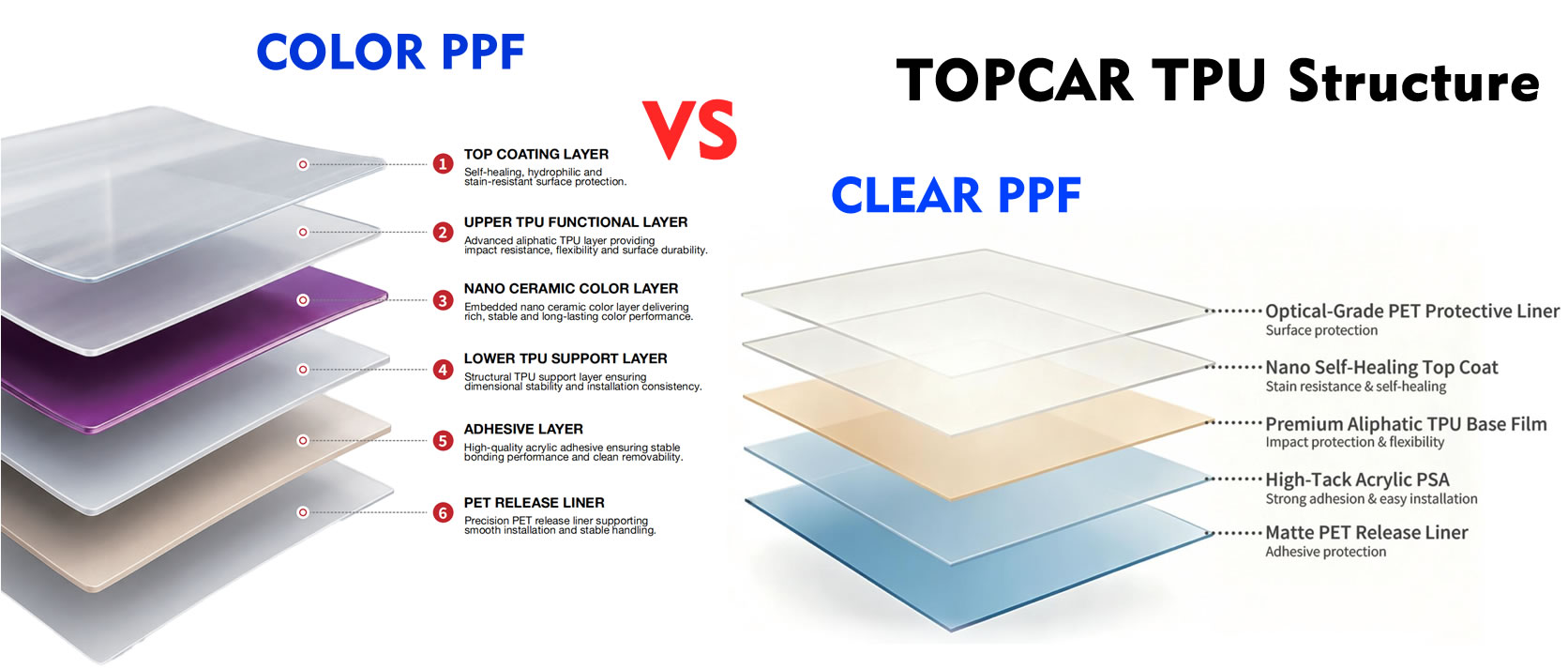
A typical PPF construction includes three main functional components:
-
Top Coat – provides surface protection and influences properties such as gloss, stain resistance, and self-healing performance.
-
TPU Layer – provides flexibility, impact resistance, and the main physical protection.
-
Adhesive Layer – bonds the film to the vehicle surface and supports installation and removal.
The exact construction varies between manufacturers and product ranges.
What Does PPF Protect Against?
The main purpose of PPF is to reduce damage to the original paint caused by everyday driving and environmental exposure.
Stone Chips and Road Debris
The front of a vehicle is constantly exposed to small stones, sand, and road debris. PPF provides an additional layer that can absorb and distribute some of this impact before it reaches the original paint.
Light Scratches and Surface Marks
PPF can help reduce the risk of minor scratches and surface marks caused by everyday use, washing, and contact.
Some advanced films also feature self-healing top coats, which can reduce the appearance of certain light scratches when exposed to heat.
UV and Environmental Exposure
Paint is exposed to sunlight, moisture, dirt, insects, and other contaminants throughout its service life. PPF creates a protective layer over the original finish and can help maintain the appearance of the protected surface.

How Does PPF Work?
PPF works as a sacrificial protective layer between the vehicle's paint and the outside environment.
When properly installed, the film takes much of the everyday wear while the original paint remains underneath.
However, PPF performance is not determined by thickness alone. Several factors work together, including:
-
TPU quality
-
Film thickness
-
Top coat technology
-
Adhesive performance
-
Manufacturing quality
-
Installation technique
-
Climate and UV exposure
-
Vehicle maintenance
This is why two PPF products with similar specifications can perform differently in real-world applications.
What Is PPF Made Of?

TPU (Thermoplastic Polyurethane) is one of the most important materials used in modern PPF.
High-quality TPU can provide a combination of:
-
Flexibility
-
Elasticity
-
Impact resistance
-
Optical clarity
-
Conformability
-
Durability
However, TPU is only one part of the complete PPF system.
The top coat affects surface performance and appearance, while the adhesive plays an important role in installation and long-term bonding.
For professional installers and distributors, it is therefore useful to evaluate the complete film construction rather than focusing on a single specification.
Clear PPF vs Color PPF
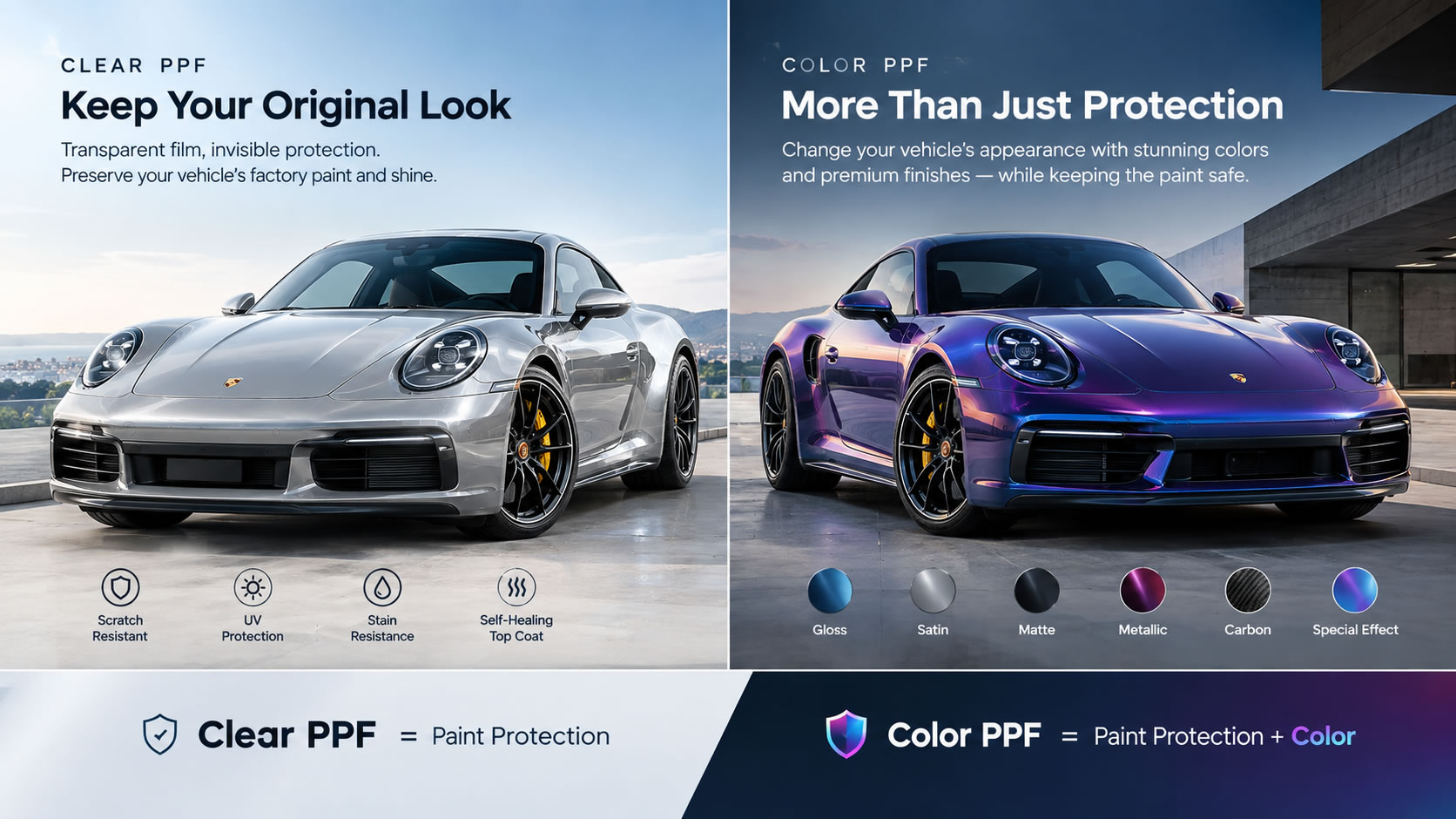
PPF is available in different finishes and product types, with Clear PPF and Color PPF being two important categories.
Clear PPF
Clear PPF is designed to protect the original appearance of the vehicle while keeping the factory paint visible.
It is commonly used on:
-
Front bumpers
-
Hood
-
Front fenders
-
Side mirrors
-
Rocker panels
-
Door edges
-
Other high-impact areas
Clear PPF is available in finishes such as gloss and matte, depending on the product.
Color PPF
Color PPF combines paint protection with color customization.
Instead of simply protecting the existing paint, Color PPF allows vehicle owners to change the appearance of their vehicle while adding a protective film layer.
Depending on the product range, color PPF can include gloss, satin, metallic, carbon-style, and special-effect finishes.
In simple terms:
Clear PPF = Paint Protection
Color PPF = Paint Protection + Color
For customers looking for both vehicle customization and protection, Color PPF provides an alternative to traditional vinyl wrap.
Where Is PPF Commonly Installed?
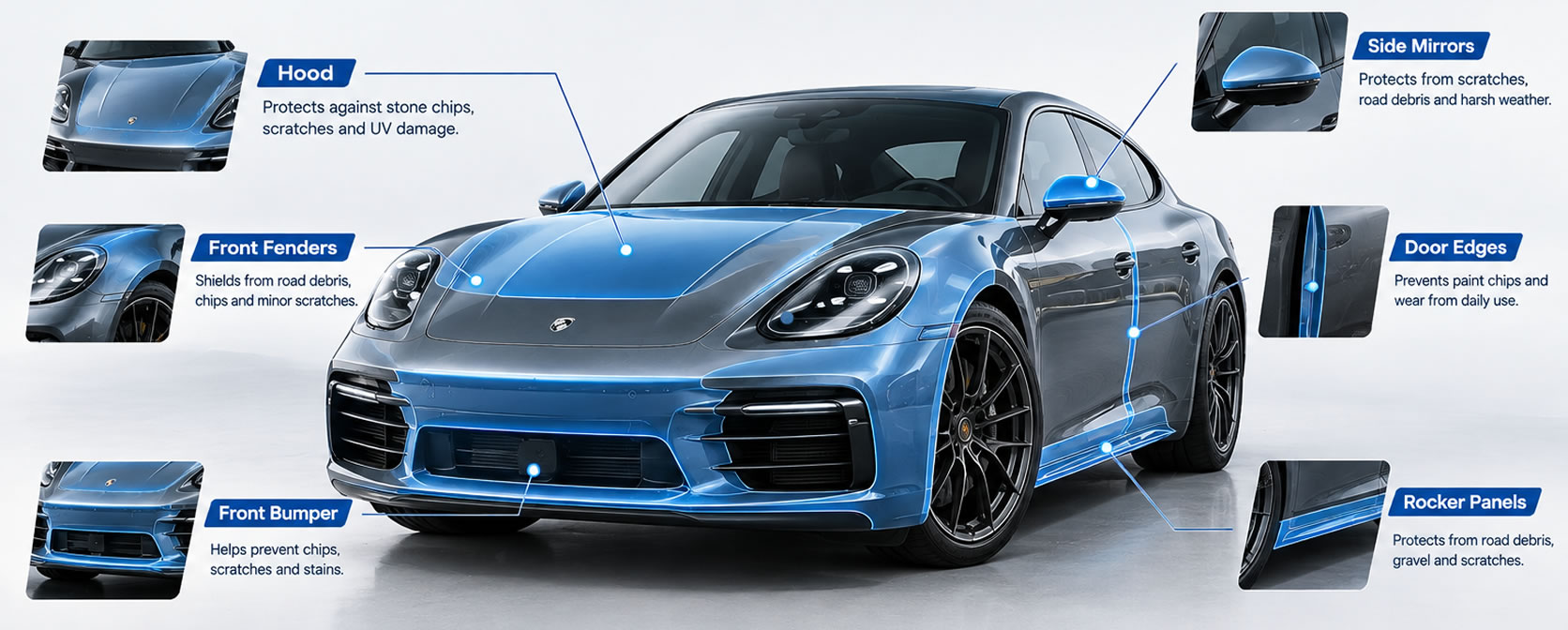
PPF can be installed on selected high-impact areas or across the entire vehicle.
Common applications include:
-
Front bumper
-
Hood
-
Front fenders
-
Side mirrors
-
Rocker panels
-
Door edges
-
Door cups
-
Headlights
Many customers choose partial coverage for high-impact areas, while full-vehicle PPF provides more comprehensive protection.
The ideal coverage depends on the vehicle, driving conditions, customer requirements, and budget.
How Long Does PPF Last?
The lifespan of PPF depends on the film construction, material quality, installation, climate, UV exposure, vehicle usage, and maintenance.
High-quality PPF can be designed for long-term automotive applications, but actual service life varies according to real-world conditions.
Proper installation and regular maintenance are especially important for maintaining the film's appearance and performance over time.
For more information, see our guide:
How Long Does PPF Last? Factors That Affect Paint Protection Film Lifespan

PPF can be a practical solution for vehicle owners who want to preserve their original paint while reducing exposure to everyday road damage.
It is particularly relevant for:
-
New vehicles
-
Luxury and performance cars
-
Daily drivers
-
Collector vehicles
-
Vehicles exposed to road debris
-
Customers who want long-term paint protection
The most important consideration is choosing a PPF product that matches the intended application and having it installed correctly.
Final Thoughts
Paint Protection Film is a multi-layer automotive protection system designed to help protect vehicle paint while maintaining its appearance.
Understanding the differences between TPU, top coat, adhesive, thickness, and film finish can help vehicle owners, installers, and distributors make more informed decisions when choosing PPF.
Whether you need transparent protection or want to combine protection with a new appearance, there are different PPF solutions for different applications.
Looking for professional PPF solutions for your market?
Explore Clear PPF and Color PPF from TOPCAR, or contact our team to discuss product specifications, samples, and OEM/ODM solutions.